Star Near Galactic Center Moves at 3% Light Speed
What happened
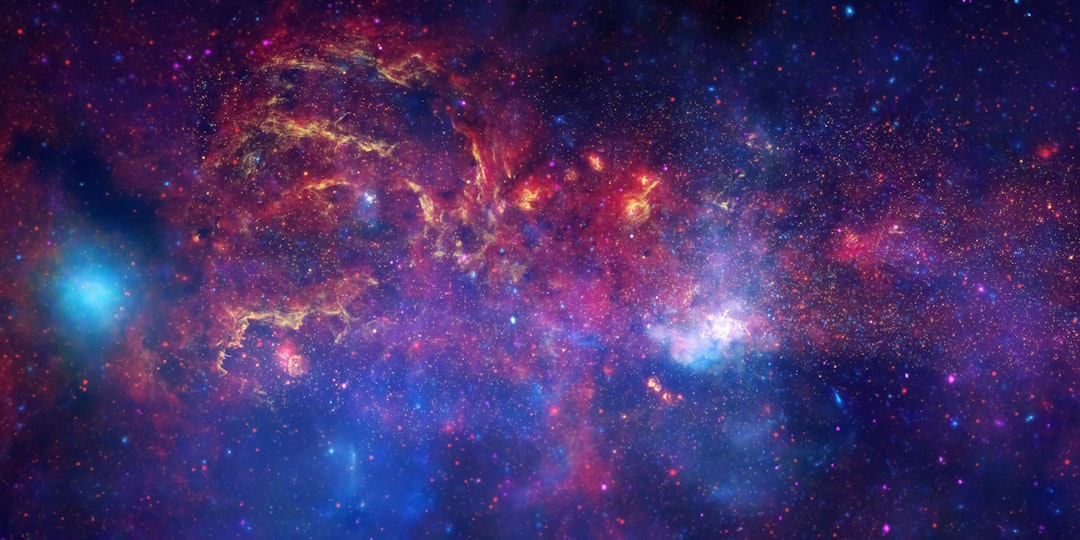
A star located near the center of our galaxy has been observed reaching speeds close to 3 percent of the speed of light. This star orbits an object that is four million times the mass of the Sun, yet emits no light of its own. The study of this star's orbit over nearly three decades has contributed to significant advancements in astronomy.
Key facts
- The star is located near the center of our galaxy.
- It reaches speeds of almost 3 percent of the speed of light.
- The object it orbits is four million times the mass of the Sun.
- The object emits no light of its own.
- Tracking the star's orbit has been ongoing for nearly three decades.
Background & context
The center of our galaxy, the Milky Way, is a region of intense scientific interest. It is widely believed to contain a supermassive black hole, a concept that has been a cornerstone of astrophysics for decades. Black holes are regions in space where the gravitational pull is so strong that nothing, not even light, can escape. The presence of such an object at the galaxy's center was theorized long before it could be observed directly. The study of stars orbiting this region, such as the one in question, provides crucial evidence supporting the existence of these enigmatic objects. The theory of general relativity, proposed by Albert Einstein, predicts how massive objects warp the fabric of space-time, affecting the motion of nearby objects. Observations of stars like this one allow astronomers to test these predictions in extreme environments, offering a unique laboratory for understanding the fundamental laws of physics. The ability to track a star's orbit with such precision over decades is a testament to the advancements in observational astronomy, driven by improvements in telescope technology and data analysis techniques.
Why it matters (for US readers)
Understanding the dynamics at the center of our galaxy enhances our knowledge of fundamental physics and the universe's structure. This research not only confirms theoretical predictions but also pushes the boundaries of technology and observational techniques. For the scientific community and the public, these discoveries underscore the importance of sustained investment in astronomical research and technology. For the United States, a leader in space exploration and research, these findings highlight the critical role of international collaboration and funding in advancing our understanding of the universe. The insights gained from such studies have implications beyond astronomy, influencing fields like physics and engineering. They also inspire future generations of scientists and engineers, emphasizing the importance of STEM education.
Stakeholders & viewpoints
- Astronomers and physicists: Gain valuable data to test and refine theories of gravity and black holes. These findings provide empirical evidence that can validate or challenge existing models, driving scientific progress.
- Scientific institutions: Benefit from increased recognition and potential funding for future research. Successful projects can lead to enhanced reputations and attract top talent and resources.
- General public: Gains insight into the universe and the fundamental laws that govern it. Public interest in such discoveries can lead to greater support for science education and research funding.
Timeline & what to watch next
- Observations of the star's orbit have been ongoing for nearly three decades. This long-term study exemplifies the dedication and patience required in astronomical research.
- Future studies may focus on refining measurements and exploring other stars in the region. As technology advances, astronomers will be able to observe these phenomena with greater precision, potentially uncovering new insights.
- Continued advancements in telescope technology could provide even more detailed observations. Instruments like the James Webb Space Telescope and other ground-based observatories will play a crucial role in future discoveries. The ongoing exploration of our galaxy's center will likely yield further surprises and deepen our understanding of the cosmos. As we continue to probe these distant regions, we not only learn more about the universe but also about our place within it.
Sources
Up Next