How NASA Missions Shaped Space Exploration
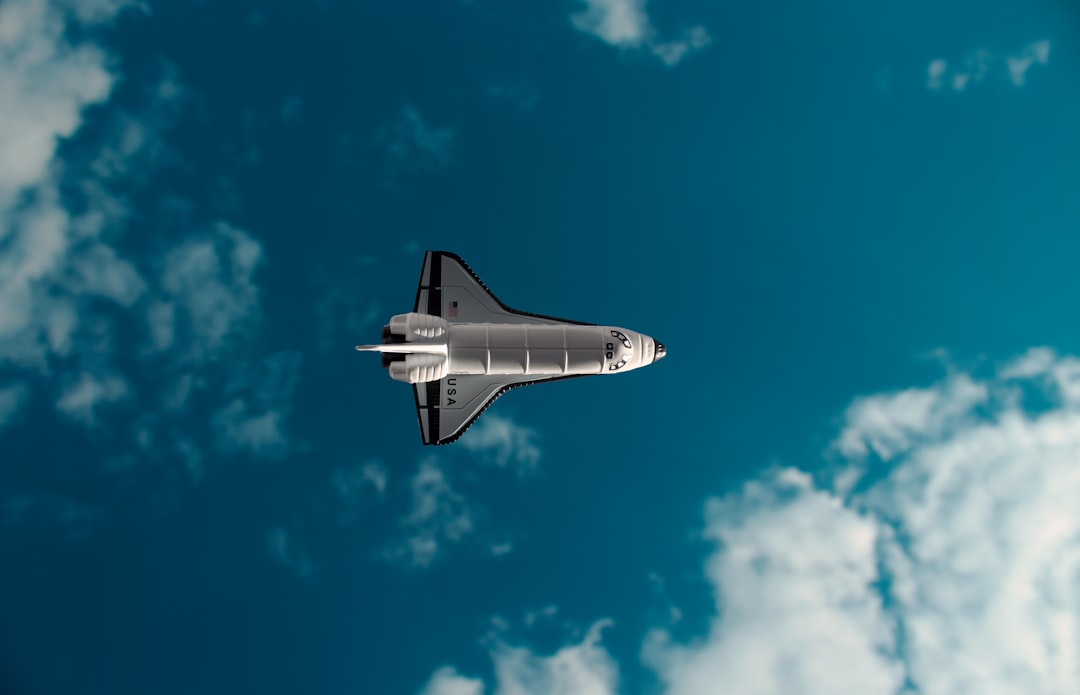
Introduction
NASA, the United States' space agency, has been at the forefront of space exploration since its inception in 1958. Over the decades, NASA's missions have not only expanded our knowledge of the universe but have also driven technological advancements and inspired generations. This article delves into some of the most pivotal NASA missions that have fundamentally changed space exploration.
Key Points
- NASA's missions have expanded our understanding of the solar system and beyond.
- Technological advancements from these missions have had widespread applications.
- These missions have inspired international collaboration in space exploration.
Main Sections
The Apollo Program
The Apollo program is perhaps the most iconic of NASA's missions. Initiated in the 1960s, its primary goal was to land humans on the Moon and bring them safely back to Earth. Apollo 11, launched in 1969, achieved this goal, making Neil Armstrong and Buzz Aldrin the first humans to walk on the lunar surface. The program not only demonstrated the feasibility of human space travel but also provided invaluable scientific data about the Moon.
The Hubble Space Telescope
Launched in 1990, the Hubble Space Telescope has revolutionized our understanding of the universe. Positioned above Earth's atmosphere, Hubble has provided clear and detailed images of distant galaxies, nebulae, and other astronomical phenomena. Its observations have led to significant discoveries, such as the rate of expansion of the universe and the existence of dark energy.
The Mars Rover Missions
NASA's Mars rover missions, including Spirit, Opportunity, Curiosity, and Perseverance, have been instrumental in exploring the Martian surface. These rovers have analyzed soil samples, studied the planet's climate and geology, and searched for signs of past life. The data collected has been crucial in understanding Mars' potential to support life and planning future human missions to the planet.
The Voyager Probes
Launched in 1977, the Voyager probes were designed to study the outer planets of our solar system. Voyager 1 and Voyager 2 have provided detailed images and data on Jupiter, Saturn, Uranus, and Neptune. Remarkably, both probes have now entered interstellar space, providing the first direct measurements of the heliosphere's boundary.
US Examples & Data
- According to NASA, the Apollo program cost approximately $25.4 billion in 1973 dollars, equivalent to about $150 billion today. This investment not only achieved its primary goal but also spurred technological advancements in various fields, including computing and telecommunications.
- The Hubble Space Telescope has contributed to over 15,000 scientific papers, making it one of the most productive scientific instruments ever built. Its data has been crucial in fields ranging from astrophysics to cosmology.
Why It Matters
NASA's missions have had a profound impact on both science and society. They have expanded our understanding of the universe, driven technological innovation, and inspired generations to pursue careers in science and engineering. Moreover, these missions have fostered international collaboration, as space exploration increasingly becomes a global endeavor. Understanding these missions' contributions helps appreciate the role of space exploration in advancing human knowledge and capability.
FAQ
What was the main goal of the Apollo program?
The primary goal of the Apollo program was to land humans on the Moon and return them safely to Earth, which was achieved with Apollo 11 in 1969.
How has the Hubble Space Telescope impacted science?
Hubble has provided unprecedented images and data, leading to major discoveries about the universe, such as the rate of its expansion and the existence of dark energy.
What have the Mars rovers discovered?
The Mars rovers have provided insights into the planet's geology, climate, and potential to support life, laying the groundwork for future human exploration.
Sources
- NASA Apollo Program Overview
- Hubble Space Telescope Facts
- Mars Exploration Program
- Voyager Mission Overview
Related Topics
- The Future of Space Exploration
- International Space Collaboration
- Technological Innovations from Space Missions
Up Next