Everyday Physics Behind Common Household Tools (2026)
Introduction
Household tools are essential for daily tasks, from cooking to cleaning and repairs. While they may seem simple, these tools rely on fundamental physics principles to function effectively. Understanding the physics behind these tools can enhance their use and maintenance, ensuring they serve their purpose efficiently.
Key Points
- Levers and Fulcrums: Many tools, such as scissors and pliers, operate as levers. A lever consists of a rigid bar that pivots around a fulcrum to amplify force, making tasks easier.
- Inclined Planes: Tools like screwdrivers and knives use the principle of inclined planes to convert a small input force into a larger output force, facilitating cutting or driving screws.
- Wheels and Axles: Devices like rolling pins and hand trucks utilize wheels and axles to reduce friction, making it easier to move heavy objects.
- Pulleys: Though less common in household tools, pulleys can be found in systems like window blinds, where they help lift heavy loads with less effort.
- Hydraulics: Tools such as car jacks and hydraulic presses use fluid pressure to multiply force, allowing for the lifting of heavy objects with minimal effort.
Quick Q&A
- What physics principle do scissors use?
Scissors operate as a pair of levers with a common fulcrum, amplifying the force applied by the user. - How does a screwdriver work?
A screwdriver uses the principle of the inclined plane, converting rotational force into linear force to drive screws. - Why do rolling pins have handles?
Handles on rolling pins act as axles, reducing friction and making it easier to roll out dough. - What is the purpose of a pulley in window blinds?
Pulleys in window blinds reduce the effort needed to lift the blinds by distributing the weight across the system. - How do hydraulic jacks lift heavy objects?
Hydraulic jacks use fluid pressure to multiply force, allowing a small input force to lift heavy loads. - Why are knives designed with sharp edges?
Sharp edges reduce the surface area in contact with the material, concentrating force and making cutting easier. - How do pliers amplify force?
Pliers use the lever principle, with the fulcrum located between the handles and jaws, to amplify the user's grip force. - What role does friction play in household tools?
Friction can both aid and hinder tool function; it provides grip but can also cause wear and require more effort to use tools.
Deeper Dive
Levers and Fulcrums
Levers are one of the simplest machines, consisting of a bar that pivots around a fulcrum. The position of the fulcrum relative to the input and output forces determines the mechanical advantage. For example, in scissors, the fulcrum is located between the handles and the blades, allowing a small force applied at the handles to be magnified at the blades, cutting through materials with ease.
Inclined Planes
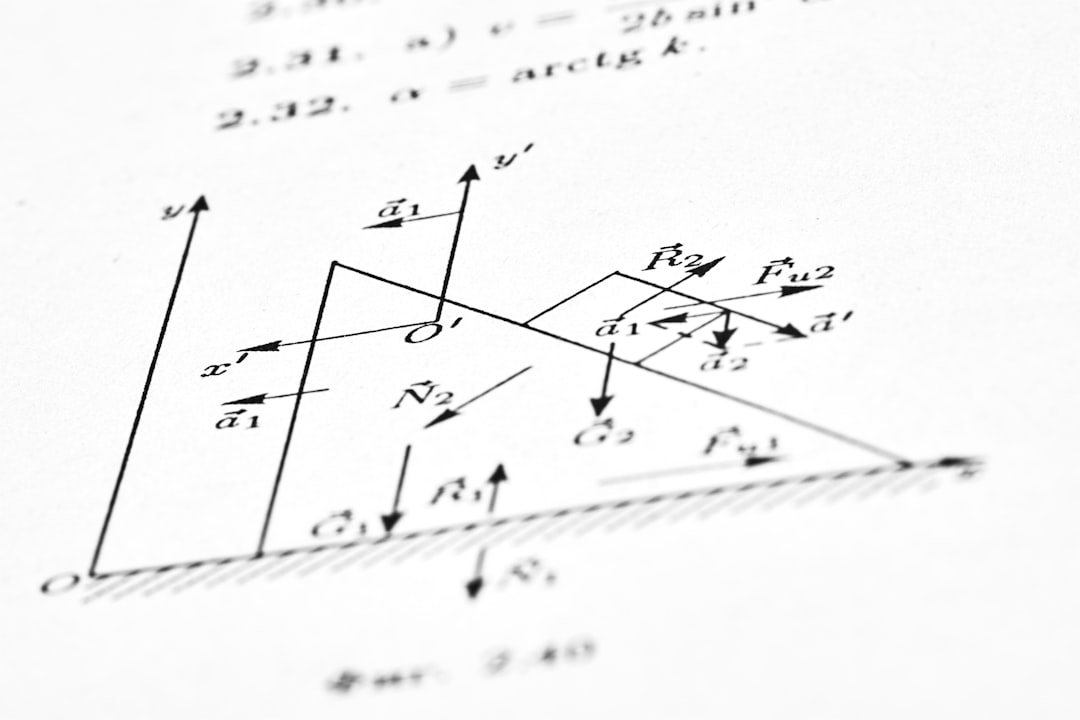
An inclined plane allows for the distribution of force over a longer distance, reducing the effort needed to perform work. Screwdrivers and knives are practical applications of this principle. The helical structure of a screw is essentially an inclined plane wrapped around a cylinder, converting rotational force into linear motion.
Wheels and Axles
The wheel and axle system reduces friction, making it easier to move objects. This principle is evident in rolling pins, where the axle (handles) allows the wheel (cylinder) to roll smoothly over dough, and in hand trucks, where wheels reduce the effort needed to transport heavy items.
Pulleys
Pulleys change the direction of a force and can also provide a mechanical advantage when multiple pulleys are used together. In household applications, such as window blinds, pulleys make it easier to lift and lower the blinds by distributing the weight across the system.
Hydraulics
Hydraulic systems use the incompressibility of fluids to transmit force. In a hydraulic jack, a small force applied to a piston is transmitted through the fluid to a larger piston, multiplying the force and allowing the lifting of heavy objects with minimal effort.
US Examples & Data
- Scissors and Shears: Common in households, these tools are used for cutting paper, fabric, and other materials. According to the Bureau of Labor Statistics, the average American household spends about $1,500 annually on household supplies, which include tools like scissors.
- Screwdrivers: Essential for assembling furniture and performing minor repairs. The National Association of Home Builders reports that 90% of homeowners perform some form of DIY home improvement, often requiring screwdrivers.
- Rolling Pins: Used in 70% of American households, according to a survey by the American Bakers Association, highlighting their role in baking and cooking.
- Window Blinds: The Window Covering Manufacturers Association notes that 60% of US homes use blinds, many of which incorporate pulley systems for ease of use.
- Hydraulic Jacks: Commonly found in garages, hydraulic jacks are used for vehicle maintenance. The American Automobile Association (AAA) reports that 80% of American households own at least one vehicle, necessitating tools like hydraulic jacks for maintenance.
Why It Matters
Understanding the physics behind household tools can lead to more efficient use and maintenance, prolonging their lifespan and improving safety. By recognizing the principles at work, users can select the right tool for the job, reducing effort and increasing effectiveness. This knowledge also fosters innovation, as users can apply these principles to solve new problems or improve existing tools.
Sources
- National Institute of Standards and Technology (NIST)
- Bureau of Labor Statistics (BLS)
- American Bakers Association
- National Association of Home Builders
- American Automobile Association (AAA)
- Window Covering Manufacturers Association
Related Topics
- The Physics of Cooking: How Heat and Tools Transform Food
- Simple Machines in Everyday Life: Beyond the Household
- The Role of Friction in Tool Efficiency and Wear
- Innovations in Tool Design: From Ancient to Modern Times
Up Next
