Pivotal NASA Missions in Space Exploration
Introduction
NASA, the United States' National Aeronautics and Space Administration, has been at the forefront of space exploration since its establishment in 1958. Through a series of groundbreaking missions, NASA has expanded human knowledge about the universe, advanced technology, and inspired generations. This article delves into some of the most influential NASA missions that have reshaped our understanding of space.
Key Points
- Apollo Program: The Apollo missions, particularly Apollo 11, marked humanity's first steps on the Moon in 1969. This achievement demonstrated the feasibility of human space travel and lunar exploration.
- Voyager Probes: Launched in 1977, Voyager 1 and 2 have provided invaluable data about the outer planets and are now exploring interstellar space, offering insights into the solar system's boundary.
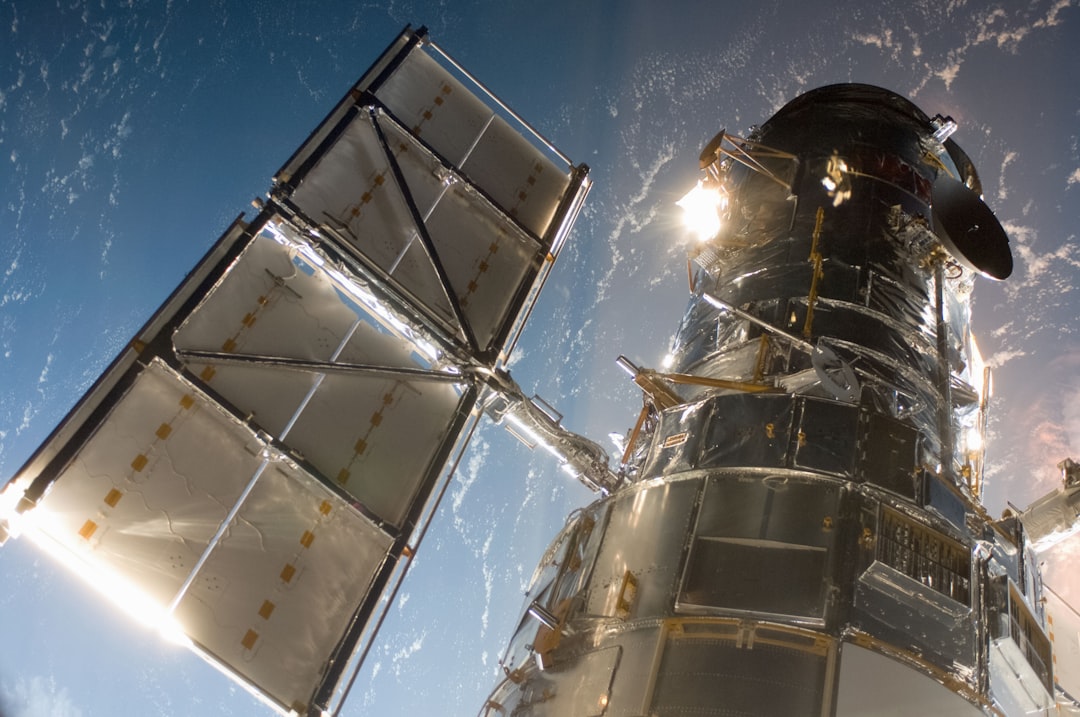
- Hubble Space Telescope: Since its launch in 1990, Hubble has revolutionized astronomy with its detailed images of distant galaxies, nebulae, and other celestial phenomena.
- Mars Rovers: Missions like Spirit, Opportunity, and Curiosity have transformed our understanding of Mars, revealing evidence of past water and the planet's potential to support life.
- International Space Station (ISS): A collaborative effort with multiple countries, the ISS serves as a microgravity laboratory and a platform for international cooperation in space.
- James Webb Space Telescope: Set to succeed Hubble, the James Webb Space Telescope aims to explore the universe's earliest galaxies and study the atmospheres of exoplanets.
Quick Q&A
- What was the goal of the Apollo program?
The Apollo program aimed to land humans on the Moon and bring them safely back to Earth, which it achieved with Apollo 11 in 1969. - What have the Voyager probes discovered?
The Voyager probes have provided detailed images and data on Jupiter, Saturn, Uranus, and Neptune, and are now studying the heliosphere's outer edges. - Why is the Hubble Space Telescope significant?
Hubble has provided unprecedented images and data that have deepened our understanding of the universe, including the rate of its expansion. - What have Mars rovers discovered?
Mars rovers have found evidence of past water on Mars, suggesting that the planet may have once supported life. - What is the purpose of the ISS?
The ISS serves as a research laboratory for scientific experiments in microgravity and fosters international collaboration in space exploration. - How will the James Webb Space Telescope differ from Hubble?
The James Webb Space Telescope will observe in infrared, allowing it to see through cosmic dust and study the universe's earliest galaxies. - When were the Voyager probes launched?
Voyager 1 and 2 were launched in 1977. - What is the significance of the Mars rover Curiosity?
Curiosity has been exploring Mars since 2012, analyzing soil and rock samples to assess the planet's habitability.
Deeper Dive
Apollo Program
The Apollo program was a series of missions designed to land humans on the Moon and return them safely to Earth. Apollo 11, the most famous mission, achieved this goal on July 20, 1969, when astronauts Neil Armstrong and Buzz Aldrin became the first humans to walk on the lunar surface. This mission not only fulfilled President John F. Kennedy's 1961 promise to land a man on the Moon but also established the United States as a leader in space exploration.
Voyager Probes
The Voyager missions have been instrumental in expanding our understanding of the outer planets and beyond. Voyager 1 and 2 have provided detailed images and data on the gas giants and their moons, revealing complex atmospheres and active geology. As they continue their journey into interstellar space, these probes are helping scientists understand the heliosphere's boundary and the transition to the interstellar medium.
Hubble Space Telescope
Launched in 1990, the Hubble Space Telescope has been a cornerstone of modern astronomy. Its high-resolution images have allowed scientists to study celestial phenomena in unprecedented detail, leading to discoveries such as the accelerating expansion of the universe and the presence of supermassive black holes in galaxy centers.
Mars Rovers
NASA's Mars rover missions have been pivotal in exploring the Red Planet. Spirit and Opportunity, launched in 2003, provided evidence of past water activity on Mars. Curiosity, which landed in 2012, continues to analyze Martian soil and rock samples, searching for signs of past life and assessing the planet's habitability.
International Space Station
The ISS represents a significant achievement in international cooperation, with contributions from NASA, Roscosmos, ESA, JAXA, and CSA. Since its first module was launched in 1998, the ISS has hosted numerous scientific experiments in microgravity, advancing our understanding of biology, physics, and materials science.
James Webb Space Telescope
Scheduled for launch in December 2021, the James Webb Space Telescope is designed to complement and extend Hubble's discoveries. With its advanced infrared capabilities, it will explore the universe's earliest galaxies, star formation, and the atmospheres of exoplanets, potentially identifying signs of habitability.
US Examples & Data
- Apollo 11: The mission cost approximately $25.4 billion in 1973 dollars, equivalent to about $150 billion today. It involved over 400,000 engineers, scientists, and technicians.
- Voyager Probes: Each Voyager probe cost about $250 million in 1977 dollars. They continue to transmit data, with Voyager 1 being the farthest human-made object from Earth.
- Hubble Space Telescope: The total cost of Hubble, including development, launch, and maintenance, is estimated at $10 billion. It has produced over 1.5 million observations.
- Mars Rovers: The Curiosity rover's mission cost approximately $2.5 billion. It has traveled over 16 miles on Mars, analyzing samples and sending data back to Earth.
- International Space Station: The ISS has an estimated cost of over $150 billion, with ongoing annual maintenance costs of about $3 billion.
- James Webb Space Telescope: The project cost is estimated at $10 billion. It will be positioned at the second Lagrange point (L2), about 1.5 million kilometers from Earth.
Why It Matters
NASA's missions have not only expanded our understanding of the universe but have also driven technological advancements and inspired generations. These missions have led to developments in materials science, telecommunications, and computing. Moreover, they have fostered international collaboration and demonstrated the potential for peaceful cooperation in space. Understanding these missions' impacts helps appreciate the role of space exploration in scientific progress and global cooperation.
Sources
- NASA - Apollo Program
- NASA - Voyager Mission
- NASA - Hubble Space Telescope
- NASA - Mars Exploration Program
- NASA - International Space Station
- NASA - James Webb Space Telescope
Related Topics
- SpaceX and Commercial Spaceflight
- The Future of Human Space Exploration
- The Search for Extraterrestrial Life
- Advances in Space Technology
- The Role of Satellites in Modern Life
Up Next
