# ESA's JUICE Mission Finds New Activity on Comet 3I/ATLAS
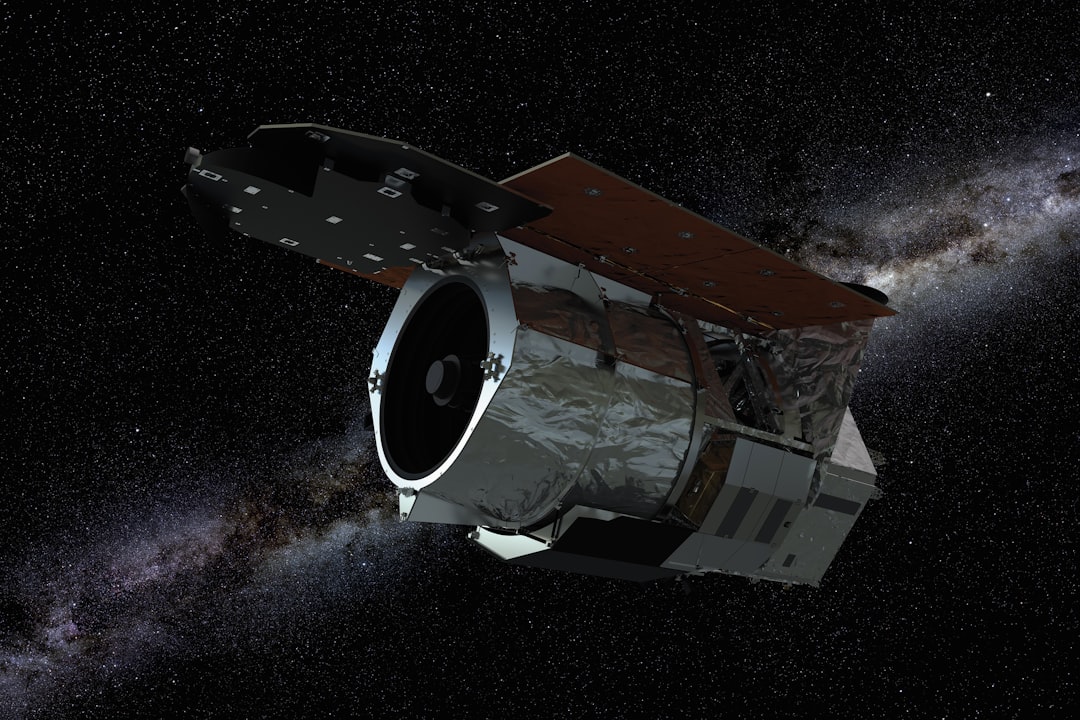
What happened
In November 2025, the European Space Agency's Jupiter Icy Moons Explorer (JUICE) mission conducted observations of the comet 3I/ATLAS. Using five of its scientific instruments, JUICE collected data on the comet's behavior and composition.
Key facts
- The observations took place in November 2025.
- JUICE utilized five different science instruments for this mission.
- The focus was on understanding the comet's activity and composition.
- The findings were reported by Universe Today.
Background & context
The European Space Agency's JUICE mission is a significant endeavor aimed at exploring Jupiter and its icy moons, such as Ganymede, Callisto, and Europa. These moons are of particular interest due to their potential subsurface oceans, which could harbor conditions suitable for life. The mission's broader goal is to understand the Jovian system and its potential for supporting life. Comets like 3I/ATLAS are crucial to this exploration because they are considered time capsules from the early solar system. They contain primordial material that has remained largely unchanged since the solar system's formation over 4.5 billion years ago. By studying their composition and activity, scientists can gain insights into the processes that led to the formation of planets and other celestial bodies. The JUICE mission's observations of 3I/ATLAS contribute to a growing body of knowledge about these ancient objects. Understanding the behavior and composition of comets can help scientists piece together the history of our solar system and the conditions that led to the emergence of life on Earth.
Why it matters (for US readers)
The study of comets and their behavior is not only a European interest but also a global scientific endeavor. For US readers, this research is significant because it enhances our understanding of the solar system's formation and evolution. Such knowledge is foundational for space exploration and planetary science, which are areas of considerable interest and investment in the United States. NASA, the US space agency, often collaborates with international partners like ESA on missions that expand our understanding of space. Insights gained from the JUICE mission can inform future US-led missions and contribute to the global scientific community's efforts to explore and understand our cosmic neighborhood. Moreover, the technological advancements and scientific discoveries from missions like JUICE can have broader implications, including the development of new technologies and the inspiration of future generations of scientists and engineers.
Stakeholders & viewpoints
- European Space Agency (ESA): As the leader of the JUICE mission, ESA is focused on scientific discovery and exploration. The agency aims to expand our understanding of the Jovian system and the broader solar system through this mission.
- Scientific Community: Researchers and scientists are keenly interested in the data collected by JUICE. The observations of 3I/ATLAS provide valuable insights into cometary science, helping to unravel the history of the solar system and the origins of its constituent bodies.
- General Public: The exploration of distant celestial bodies like comets captures the imagination of the public. Understanding these objects can offer a glimpse into the past and help us comprehend the processes that shaped our planet and its environment.
Timeline & what to watch next
- November 2025: JUICE conducted observations of 3I/ATLAS. This marks a significant milestone in the mission's timeline, as it expands the scope of JUICE's scientific objectives beyond the Jovian moons.
- Future updates: Look for further analysis and publications from ESA and collaborating scientists regarding the findings from these observations. As the data is processed and interpreted, new insights into the comet's behavior and composition are expected to emerge. The JUICE mission will continue its exploration of the Jovian system, with future observations and discoveries anticipated. These findings will likely contribute to a deeper understanding of the solar system and inform future missions and research initiatives.
Sources
Up Next
