How NASA Missions Advanced Space Exploration
Introduction
Since its inception in 1958, NASA has been at the forefront of space exploration, leading missions that have expanded human knowledge and capability. From landing the first humans on the Moon to exploring the outer reaches of our solar system, NASA's missions have not only advanced scientific understanding but have also inspired generations. This article delves into some of the most pivotal NASA missions that have significantly impacted space exploration.
Key Points
- Apollo Program: The Apollo missions, particularly Apollo 11, marked the first time humans set foot on the Moon. This achievement demonstrated the feasibility of human space travel beyond Earth's orbit and laid the groundwork for future lunar and Mars exploration.
- Voyager Probes: Launched in 1977, Voyager 1 and Voyager 2 have provided humanity with its first close-up views of the outer planets and are now exploring interstellar space. Their data have been crucial in understanding the solar system's outer boundaries.
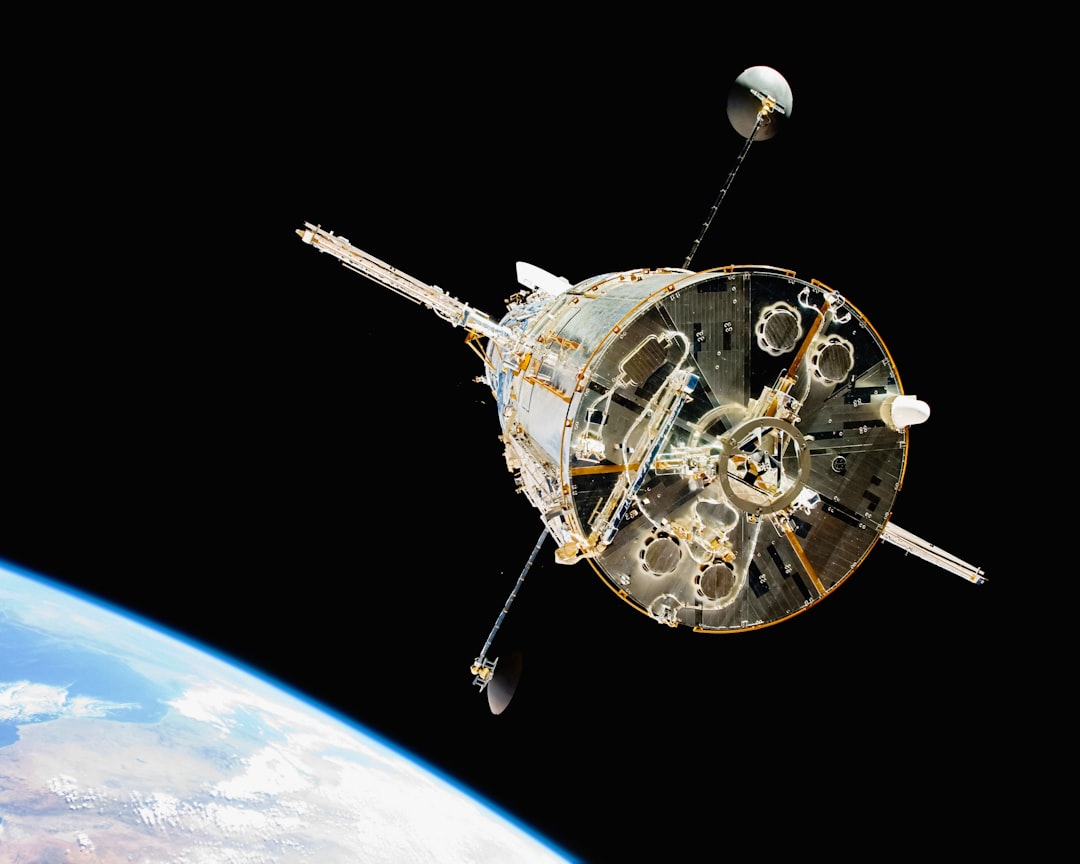
- Hubble Space Telescope: Since its launch in 1990, the Hubble Space Telescope has revolutionized astronomy. It has provided unprecedented images of distant galaxies, nebulae, and other astronomical phenomena, significantly enhancing our understanding of the universe.
- Mars Rovers: From Sojourner to Perseverance, NASA's Mars rovers have been instrumental in exploring the Martian surface. They have provided insights into the planet's geology, climate, and potential for past life, paving the way for future human missions.
- International Space Station (ISS): A collaborative effort with multiple countries, the ISS serves as a microgravity laboratory and a platform for international cooperation in space. It has been crucial for research in biology, physics, and materials science.
Case Study
Consider a classroom in a US high school where students are learning about space exploration. The teacher uses the Apollo 11 mission as a case study to illustrate the challenges and triumphs of space travel. Students learn about the technological innovations required to land on the Moon, such as the development of the Saturn V rocket and the lunar module. They also discuss the mission's impact on American society during the Cold War, highlighting how it fostered national pride and inspired a generation to pursue careers in science and engineering. The class then examines the Voyager missions, focusing on how these probes have continued to send back valuable data decades after their launch. Students are tasked with analyzing images sent back by the Hubble Space Telescope, identifying galaxies and nebulae, and discussing how these observations have changed our understanding of the universe's age and expansion.
Analysis
NASA's missions have consistently pushed the boundaries of what is possible in space exploration. The Apollo program demonstrated that human space travel to other celestial bodies was achievable, setting a precedent for future missions to Mars and beyond. The Voyager probes have expanded our knowledge of the solar system's outer planets and continue to provide data from interstellar space, offering insights into the heliosphere's structure. The Hubble Space Telescope has been a game-changer in astronomy, allowing scientists to observe the universe in unprecedented detail. Its findings have led to significant discoveries, such as the rate of the universe's expansion and the existence of dark energy. Mars rovers have transformed our understanding of the Red Planet, revealing evidence of water and potential habitability. These missions have laid the groundwork for future human exploration and potential colonization of Mars. The ISS has been a testament to international collaboration, providing a platform for scientific research that benefits humanity. It has also served as a model for future cooperative efforts in space exploration.
US Examples & Data
- Apollo 11: On July 20, 1969, Neil Armstrong and Buzz Aldrin became the first humans to walk on the Moon, a feat watched by an estimated 600 million people worldwide.
- Voyager 1: In August 2012, Voyager 1 became the first human-made object to enter interstellar space, traveling over 14 billion miles from Earth as of 2023.
- Hubble Space Telescope: Over its lifetime, Hubble has made more than 1.5 million observations, leading to over 18,000 scientific papers.
- Mars Rovers: The Curiosity rover, which landed on Mars in 2012, has traveled over 16 miles and sent back more than 800,000 images.
- ISS: Orbiting Earth at an altitude of about 250 miles, the ISS has hosted over 240 astronauts from 19 countries since 2000.
Why It Matters
NASA's missions have not only advanced scientific knowledge but have also had profound implications for technology, international cooperation, and education. The technological innovations developed for space exploration have led to numerous spinoffs, including improvements in medical imaging, telecommunications, and materials science. These missions have also fostered international partnerships, as seen with the ISS, promoting peaceful collaboration in space. Moreover, NASA's missions have inspired countless individuals to pursue careers in STEM fields, contributing to the United States' leadership in science and technology. As humanity looks toward future exploration of Mars and beyond, NASA's legacy of innovation and discovery will continue to play a crucial role in shaping our understanding of the universe.
Sources
- NASA - Apollo Program
- NASA - Voyager Mission
- NASA - Hubble Space Telescope
- NASA - Mars Exploration Program
- NASA - International Space Station
Related Topics
- The Future of Mars Exploration
- The Role of Private Companies in Space Exploration
- The Impact of Space Exploration on Technology Development
- International Collaboration in Space Missions
Up Next
